

150 Antique & Vintage
Silver Plate Flatware Patterns
We’ll identify complimentary flatware designs to seamlessly pair with an event’s theme from our Victorian, Art Deco and Camelot Mid-century Tabletop Eras
Our inventory count in antique & vintage silver plate flatware place settings will serve both intimate gatherings and larger guest counts.
Your silver plate flatware will be coordinated
and matched by era and event theme.
Antique and vintage tabletop pieces are expected to show some wear from usage.
Our large inventory of flatware is inspected, graded, cleaned, polished, sanitized and table-ready.

First Love
1847 Rogers Brothers, 1937
The First Love pattern remains one of the brand's all-time most popular vintage silver plate patterns. It blends Art Deco geometric influences with romantic motif styling. Sweet.

Coronation
Oneida Silver Company, 1938
The Coronation flatware pattern was introduced by Oneida, branded in its higher-end Community Plate mark. The pattern had a magnificent corporate roll out, like other American companies’ products, for membership in the global celebration to commemorate the crowning of King Edward VII. He ultimately abdicated the throne before his coronation ever took place. Oh, but the pattern had a happily ever-after.

Lady Hamilton
Oneida Silver Company, 1932
Named for the wife of pattern designer Grosvenor Allen, Lady Hamilton had a modernist, geometric, Art Deco design that captured 1930s elegance. Grosvenor Allen also served as the president of Oneida, naming the Grosvenor flatware pattern after himself.

Ancestral
1847 Rogers Brothers, 1924
While the home’s flatware defined Victorian status, society was in transition. The new, electric Art Deco era challenged Victorian strict rules, changed architecture and design trends, and was brighter and louder, with more edges. This Ancestral pattern was respectful of turn-of-the-century formality while bringing a hint of new architectural sharpness in its handle tip.

Serving, Hostess & Extraordinary Flatware
Victorian Fish Knife & Fork Serving Set
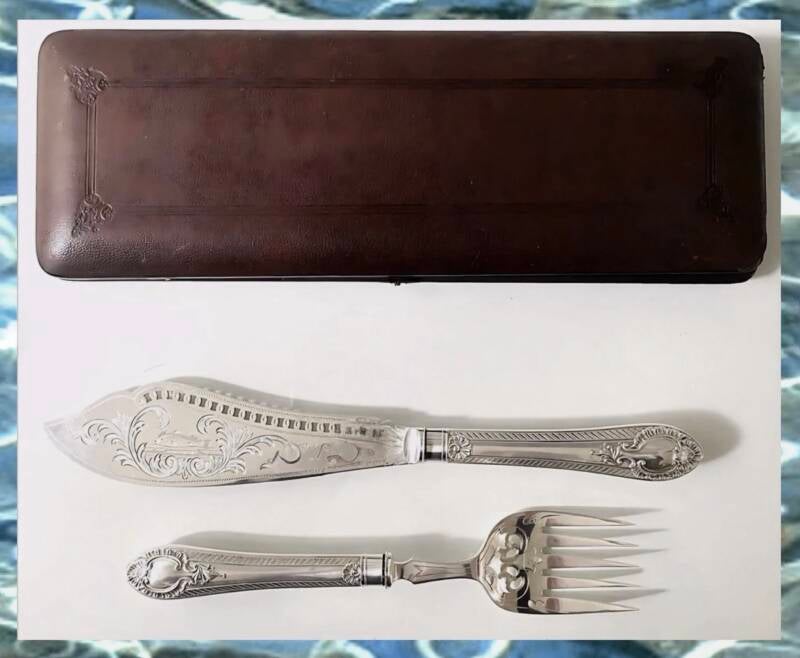
George Edward & Son Scotland Antique 1898 Silver Plate Pierced Fish Fork & Knife
A fish serving knife was paired with a fish fork for serving one of the first courses in a marathon Victorian dinner. The scalloped, pointy blade picked small bones from a cooked fish, and its flat blade slid between the flesh and the skin. The fish serving set was the epitome of sophistication, and possibly the most pretentious serving piece the Victorians ever invented.
Entertaining rules were strict in Victorian America. Imagined for every possible purpose, time of day and menu, a partial list of essential flatware pieces included pastry forks, fish forks, lettuce forks, asparagus and tomato servers, Bon Bon spoons, mayonnaise ladles and whipped cream ladles.
Art Deco Sophistication

John Sanderson & Son, Sheffield England
Mother of Pearl Art Deco 1920
Bolstered 8-Pc Fruit Knives & Forks with Sterling Ferrule
Antique mother-of-pearl flatware and serving pieces bring depth to both Victorian and Art Deco tablescapes. Buffets and individual place settings, in thoughtful and carefully-curated patterns, shapes and motifs, add an historic detail to an event’s theme.
Antique & Vintage Silver Plate Flatware Serving Pieces

W.E. Basset Co. 14” Sterling Handle Fluted Punch Ladle, 1950.
The Ladle Collection
And Charming Curiosities in Precious Patterns, Designed for Definitive Tasks
(Little things mean a lot.)
Pastry Dessert Servers, Cake Knives, Cake Cutters & Cake Forks

Meat Forks

Oneida Silver Company Morning Star, 1948

Ladles became popular in 18th Century England during the punch and soup revolution. The Sheffield, England region’s silver plate manufacturers produced ladles for punch, soup, gravy, sauce, and milk & clotted cream, in both elegant and pedestrian designs.
Cold meat forks have a task to perform with their broad, flat tines that cleanly lift slices of meats. Large two-tine or three-tine serving forks gained popularity around the 1950s.
Master Butter Knives & Butter Spreaders
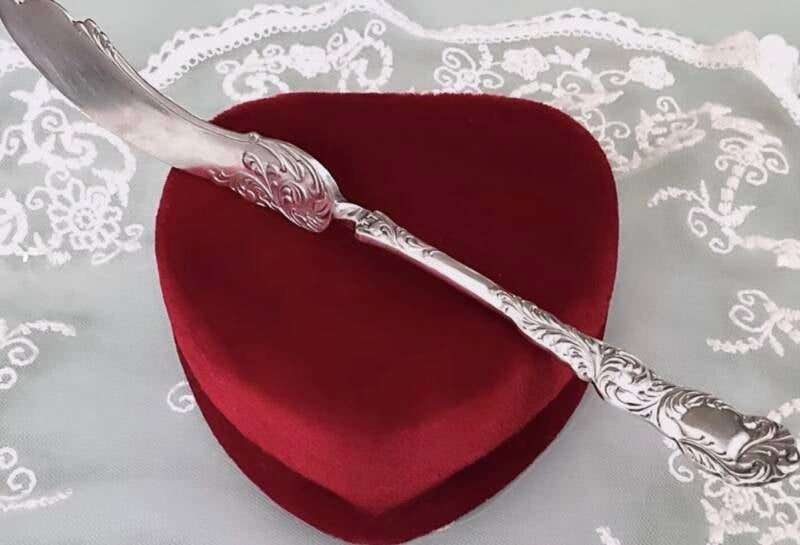
The Victorian master butter knife sits with the central butter dish to slice and transfer a pat of butter to an individual plate. Antique flatware patterns in ornate designs provide us with fabulous masterpieces in single master butter knives. Butter spreaders were set at individual place settings to spread a pat of butter on a piece of bread, broken and buttered, one bite at a time.

1847 Rogers Bros Antique Silver Plate Columbia Twisted Master Butter Knife, 1893.
Cocktail Forks
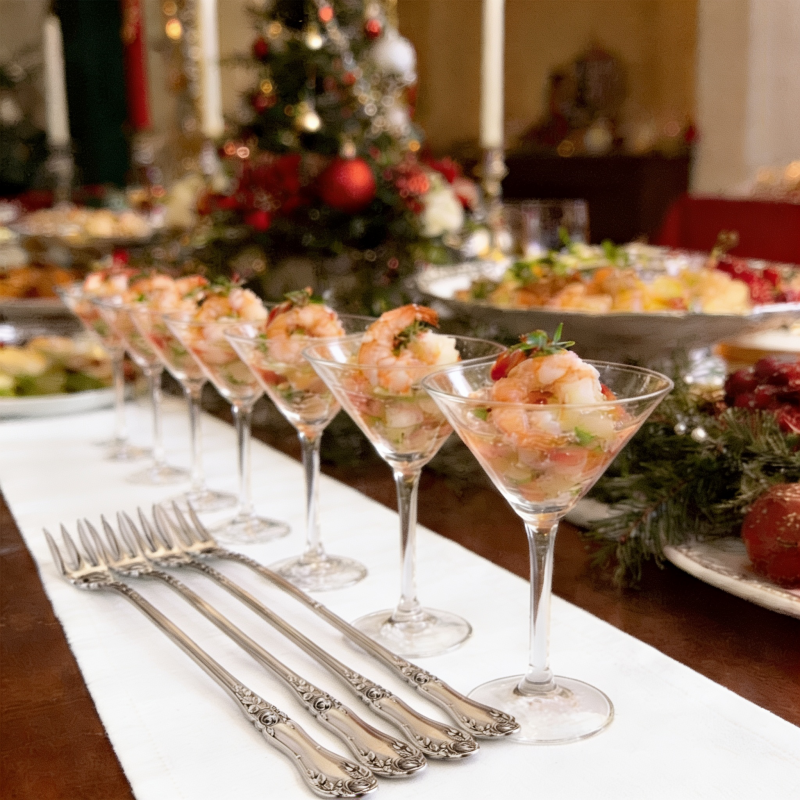
By 1890, a three-tined fork, invented for the task of properly eating oysters, was popular in the Victorian theater of a multi-course dinner. Shrimp became easily accessible beginning in the 1930s, when the shrimp cocktail found its way on fashionable dinner tables, skewered from a martini glass, with the three-tined, longer-handled cocktail fork.

An elaborate Victorian table set with lovely ornate flatware displayed a household's wealth, refinement, and class.
Knowing which fork to choose for which course or certain morsel of food separated the elite from the working classes.

Mother of Pearl & Sterling Victorian Lettuce Fork, 1911
Oneida Silver Queen Bess ll
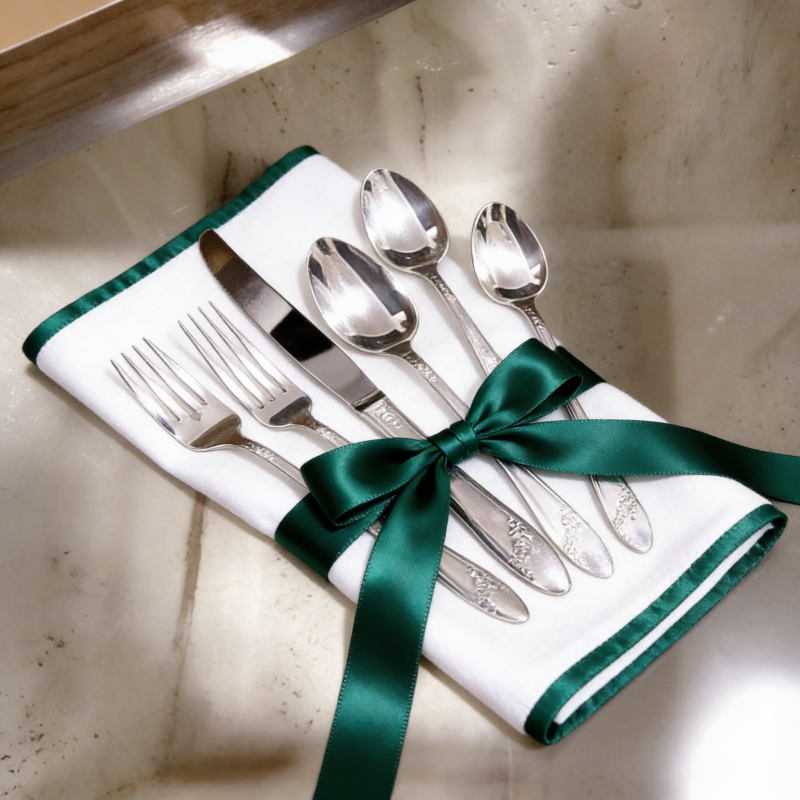
It was mid-century in America. Betty Crocker was as real as the flatware set that was used daily in homes across America in the late 1940s, 1950s and 1960s, including our home. Queen Bess II was introduced in 1946 by Oneida Community with their "Tudor Plate" trademark, offered as a Betty Crocker premium to households collecting coupons from boxes of General Mills products. The Betty Crocker Catalog Points program survived until 2006 as one of the longest-running loyalty programs in the country.
This iconic mid-century silver plate pattern is so very familiar to so many, and it feels like “home.”
Art Deco

Foshay Tower, Art Deco skyscraper, Minneapolis, 1929
In Victorian America, flatware was not merely a utility, but was a rigid social language. Victorian women were not allowed to own property so, then, their tabletop collections and hosting abilities determined their status in Victorian society. The luxury of owning a full set of silver plate flatware had been just out of the reach of the average American household. Transitional Americas’ design preferences were moving to the bright, edgy revolution, ushering in the Art Deco era. Richard Sears recognized the opportunity. He contracted directly with top manufacturers to create proprietary patterns for Sears, Roebuck & Co., establishing Sears as the undisputed top merchandiser of flatware in America. It became equalizer, proving that refinement was no longer an exclusive birthright.
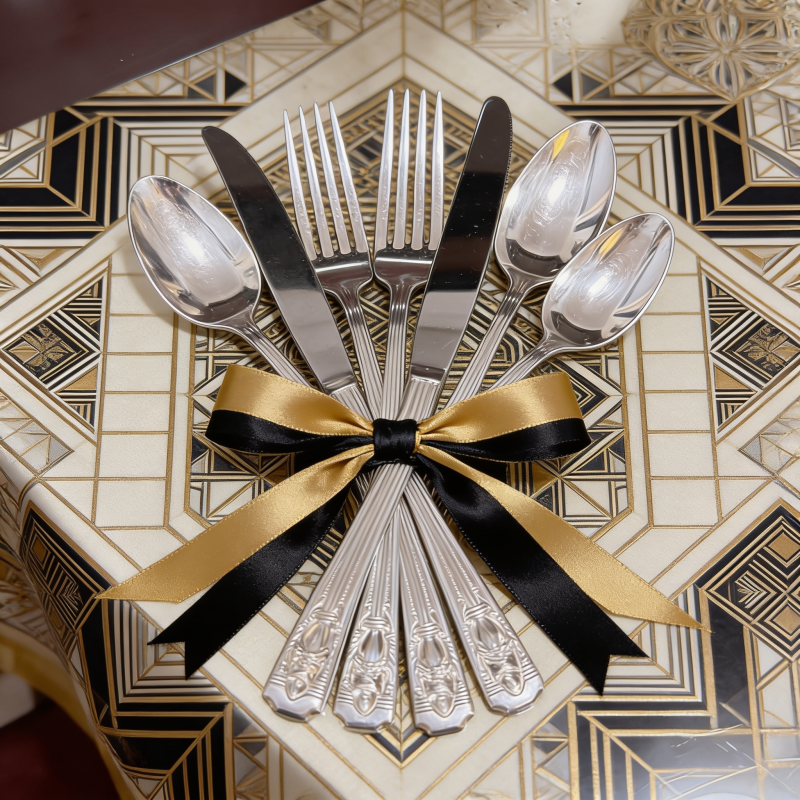
Wallace Silversmiths Harmony House Classic Filigree for Sears Roebuck & Co., Art Deco, 1937
Antique &Vintage Table-Ready, Complete Flatware Sets
For Elite, Micro Events

Fun Fact: Two of our complete, table-ready antique silver plate flatware sets were shipped to two TV shows: An HBO period series and a current FOX medical sitcom. These sets were clearly not done with their stories!